All Photos posted on this blog unless otherwise noted were taken by me with my Canon Rebel XTI using a 300 mm zoom lens
Thursday, June 21, 2012
June 2012 Bird of the Month Western Kingbird
The Western Kingbird is my "hook bird" you can see the story on the right side column of this blog.
From their look out they aggressively defend their territory keeping intruders away. Sitting on a fence post, branch of a tree or even on a sunflower the Western Kingbird will watch for flying insects then take of in a fluttering flight catch the insect and return the their post, over and over it is quite entertaining to watch them hunt.
Western Kingbirds are members of the Tyrant Flycatcher family considered the largest family of birds on Earth, with more than 400 species. Adult Western Kingbirds are grey-olive on the upper parts with a grey head and dark line through the eyes; the underparts are yellow on the breast and belly, long black tail with white outer feathers.
Common throughout Western North America during summer they migrate south to Florida, Mexico and Central America in the winter.
One of my favorite birds and my hook bird the Western Kingbird is my pick for Bird of the Month for June 2012
Saturday, May 26, 2012
Egrets, Herons and more in Greeley Colorado
I took a trip with my parents to Colorado to visit my brother and his family, they took me to a park in Greeley that felt more like I was in Florida somewhere. There was a pond in the park with an island in the middle that had a large Egret and Heron Rookery. here are some pictures of the rookery and a few others from my visit.
| Cattle Egrets, a Snowy Egret and nesting Black-crowned Night Herons |
| My first viewing of snowy egrets in a tree |
| Snowy and Cattle Egrets |
| Black-crowned Night heron on its nest |
| Black-crowned Night Heron |
| A family of Prairie Dogs, there was a whole colony of them just a block from by brothers house. |
| Ground Squirrel |
| Sphinx Moths |
Saturday, May 5, 2012
Being in the right place at the right time
| Cattle Egret |
For the past week on my way home from work I have seen one in a pasture just off the 5th South Exit of the Legacy Highway, but haven't had my camera with me and got to busy to come back down after getting home. I had to go in to work this morning for a few hours and sure enough on my way home there it was so I hurried home, got my camera and went back down to the Legacy Parkway.
Not only was it still there but several others had joined it along with a couple of Snowy Egrets and a White-face Ibis.
| Snowy Egret |
| White-faced Ibis and Cattle Egret |
| Snowy Egret and Cattle Egret |
In addition to the Egrets and Ibis there were Western Kingbirds displaying in the air over the pasture but unfortunately I wasn't able to get any pictures.
Friday, May 4, 2012
May 2012 Bird of the Month Western Meadowlark
One of the very first birds I remember from my childhood is the Western Meadowlark. I remember walking out our back door and hearing the Meadowlarks singing in the vacant lots surrounding our home on the Centerville Bench. I learned how to whistle their song and would carry on conversations with them, I would whistle and they would answer and still do.
I remember as a young scout going out to Antelope Island for scout camps and amazed at the numbers of Meadowlarks singing in the grass and sagebrush. They are still abundant on Antelope Island and at Farmington Bay, but because of the growth and development on the Centerville Bench where I grew up they are hard to find now.
One of my favorite birds, I love pointing them out to people during tours at Farmington Bay. Everyone has heard them but I am surprised at the number of people who don't know what they look like. Perhaps it is because they look so different when you see them from different angles. From the front they are bright yellow with yellow eyebrows, a black collar around their neck and breast. From the back they are streaked drab brown and gray. They also spend a lot of time on the ground making them difficult to see in the grass and shrubbery.
Like other members of the blackbird family, meadowlarks use a feeding behavior called “gaping,” which relies on the unusually strong muscles that open their bill. They insert their bill into the soil, bark or other substrate, then force it open to create a hole. This gives meadowlarks access to insects and other food items that most birds can’t reach.
The Western Meadowlark is the state bird of six states: Kansas, Montana, Nebraska, North Dakota, Oregon, and Wyoming. Only the Northern Cardinal is a more popular civic symbol, edging out the meadowlark by one state.
Monday, April 2, 2012
April 2012 Bird of the Month Spotted Towhee
| The Western Spotted Towhee has spotted and striped wings and back, the Eastern Towhee lacks these markings it's back is black. |
| They often flash the white on their tails. Spotted Towhees are quite entertaining to watch as they scratch in the leaf litter foraging for food. |
During Spring males sit in the top of the Scrub Oak and sing their distinct Towhee song declaring their territory. ![]() |
| Spotted Towhees are frequent visitors to my back yard. |
![]() |
| A Towhee with some Oregon Dark-eyed Juncos |
Saturday, March 17, 2012
Some Time for Birding
| The Great Egret that has been hanging around this winter is still there |
Great Egret
Great Blue Heron
| The Great Blue Herons are nesting now. |
Gadwall
Bufflehead
Mallard
Pintail
White-crowned Sparrow
Song Sparrow
Killdeer
American Avocet
Red-wing Blackbird
American Robin
Marsh Wren
American White Pelican
American Kestrel
Canada Goose
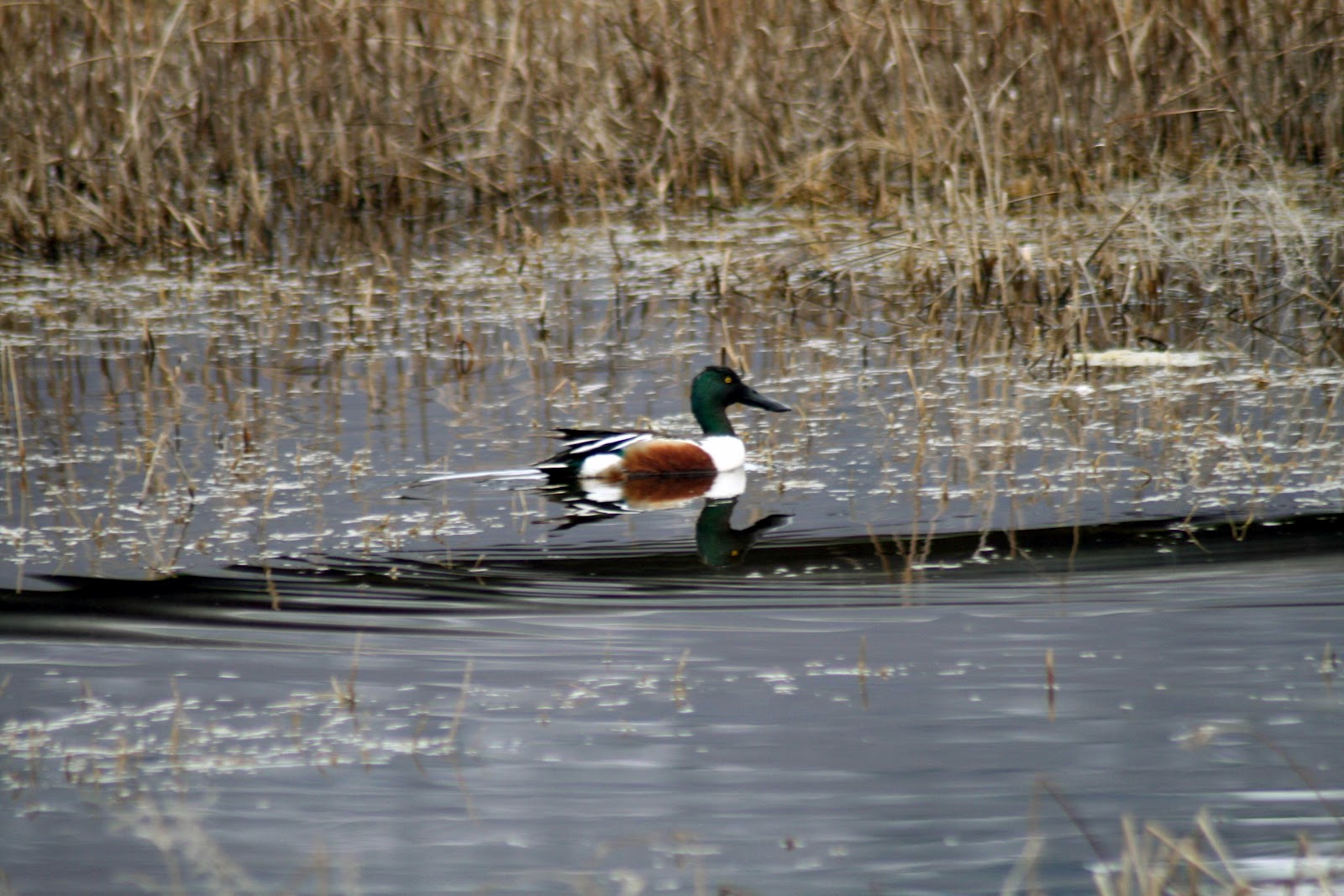
Northern Shoveler
Cinnamon Teal
Green-wing Teal
American Coot
Eurasian Collared Dove
Pied-billed Grebe
Red-tail Hawk
Northern Harrier
Sandhill Crane
European Starling
Black-billed Magpie
California Gull
American Wigeon
This Morning I took a drive up to Ogden and Bues pond to see the Mandarine Duck that was reported. Though Mandarine Ducks cannot be counted because they are not established in Utah and are most assuredly result of escaped pets they are becoming more common. I did see it but unfortunately he wasn't in the mood to have his picture taken, and I was unable to get closer that about 75 yards. He is hanging out with the Wood Ducks and even seemed have a female companion.
Birds seen at Bues pond were:
Mallard
Gadwall
Wood Duck
Mandarine Duck
Belted Kingfisher
House Finch
Black-capped Chickadee
It was good to get out and I will make a point over the next couple of months to get out more often.
Wednesday, March 7, 2012
2011 Birds of the Month
![]() |
| January 2011 Northern Harrier |
One of the reasons I do this spotlight each month and select a Bird of the Month to spotlight is to show the great diversity of birds that live here in Utah especially around the Great Salt Lake. The Great Salt Lake is such an important area for migrating and nesting birds that it is a Western Hemisphere preserve. I love Utah, the Great Salt Lake and Farmington Bay which has been my playground since I was a child. I hope those of you who visit my blog enjoy the birds and the place.
![]() |
| February 2011 Sharp-shinned Hawk |
![]() |
| March 2011 Short-eared Owl |
![]() |
| April 2011 Barn Owl |
| May 2011 American Robin |
![]() |
| June 2011 Willet |
| July 2011 Brown-headed Cowbird |
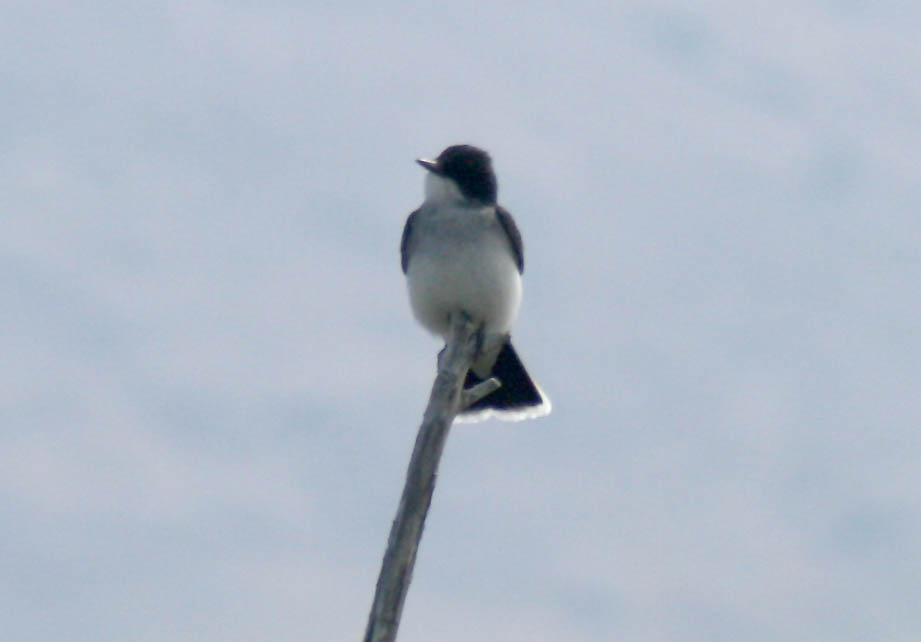
| August 2011 Eastern Kingbird |
| September 2011 Yellow-rumped Warbler |
| October 2011 Horned Lark |
| November 2011 Hermit Thrush |
| December 2011 Redhead Duck |
Subscribe to:
Posts (Atom)


.jpg)