 |
I took this picture at Farmington Bay several years ago. There was an eruption of Barn Owls, it was a cold hard winter and while it was good for birding and we saw a lot of Barn Owls that year, many died of starvation and cold. I occasionally see one once in a while but not in numbers like that winter, At night appearing almost white actually have white breast and belly speckled tawny brown, the female is usually more speckled than the male. The back is brownish tawny color speckled black and white and can vary darker or lighter. Barn Owls are nocturnal hunting at night for mice and meadow voles, They hunt by sound flying low to the ground using their heart shaped facial disk to pick up sounds. Barn Owls live in many habitats from wide open fields, wetlands and even in urban areas.  Barn Owls are the most widely distributed of all owls living on all the continents except Antarctica and many islands of the sea.    |
Friday, April 1, 2011
April Bird of the Month Barn Owl
Driving on a dirt road on a warm California night headed out to the San Joaquin River to go fishing it was dark and a full moon when all the sudden a white image like a ghost flew in front of the car, tt was eery and scared me. After flying right in front of the windshield of my little Datsun pick up it started flying out in front of me, leading me down the road. Then I saw another and another up ahead, it was like I had entered the haunted forrest, then there was one in the middle of the road. I realized what I was seeing for the first time were Barn Owls. I went fishing often on the San Joaquin and got used to seeing a lot of Barn Owls each time I went. People now often tell me about seeing Snowy Owls at night, what they are really seeing are Barn Owls.


Friday, March 25, 2011
Farmington Bay Diversity More of My Happy Place
 |
| Loggerhead Shrike |
Waterfowl, Shorebirds, Wading Birds, Birds of Prey and Passerines, it is a bird paradise. Here are some more pictures from Farmington Bay
 |
| Brewer's Blackbird |
 |
| White-crowned Sparrow |
 |
| Bald Eagle |
 |
| American Avocet |
 |
| Long-billed Dowitchers |
 |
| Downy Woodpecker |
 |
| Pickleweed |
 |
| Northern Pintail and Mallard |
 |
| Ring-necked Pheasant |
 |
| Song Sparrow |
 |
| Yellow-rumped Warbler |
 |
| American White Pelican |
 |
| Ring-necked Duck |
 |
| Greater Yellow-legs |
 |
| Spotted Towhee |
 |
| Merlin |
 |
| American Kestrel |
 |
| Black-necked Stilt |
 |
| Solitary Sandpiper |
 |
| Sora |
 |
| Virginia Rail |
 |
| Spotted Sandpiper |
Saturday, March 12, 2011
Tundra Swan Day
 |
| Tundra Swan Day is my favorite event each year, not just for the Tundra Swans but because a lot of the spring migrants start coming in. This year the Swans started leaving early, a week ago there were 10,000 Tundra Swans at Farmington Bay yesterday and today there were between a hundred and two hundred. |
 |
| Red-winged Blackbirds were singing everywhere |
 |
| Always present are the American Coots |
 |
| It has been a good year for Bald Eagles. Usually by this time there are very few if any Bald Eagles left. Today we saw at least 60. |
 |
| Song Sparrows were very vocal, a welcome sound with the promise of spring. |
 |
| Canada Geese paired up and establishing their territories for nesting |
 |
| My friend Mike Johnson came along yesterday to take pictures |
 |
| Common Mergansers |
 |
| Great Blue Herons are busy working on their nests |
 |
| For years I have been trying to get pictures of one of these little guys, this Long-tailed Weasel was very cooperative and posed like he know what he was doing. |


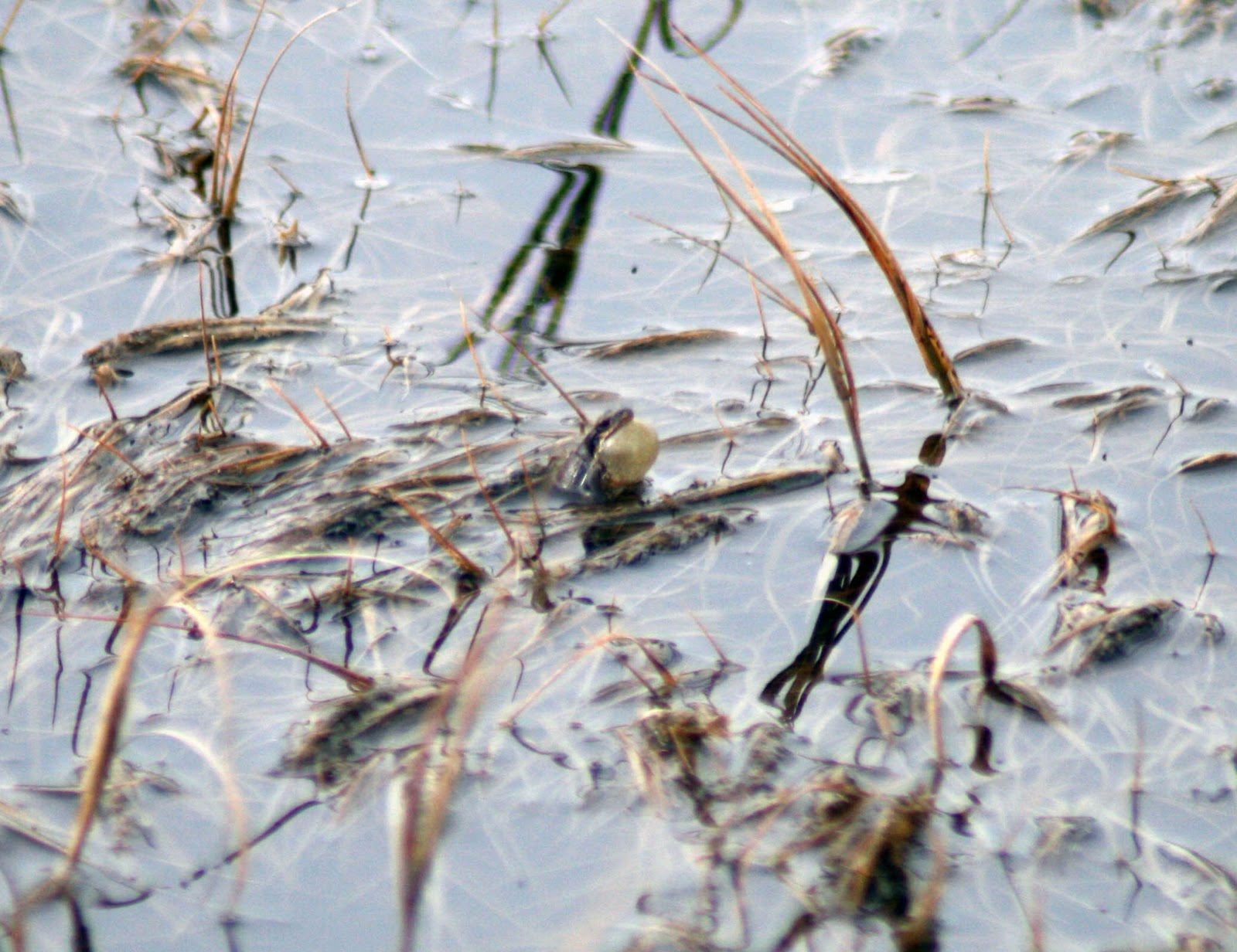 |
| Another great thing about Tundra Swan Day is the Chorus Frogs start signing. their sound is almost deafening |
 |
| These tiny frogs are very difficult to see, these are the first pictures I have ever gotten of them |
 |
| The Sandhill Cranes are usually back by Swan Day this year they came even a little earlier. I saw my first of the year 2 weeks ago. Who is watching who in this picture? |


So even if the Tundra Swans are few in numbers it is still one of the best events of the year and guaranteed not to disappoint
Friday, March 4, 2011
Awesome Cub Scouts
 |
| Watching Bald Eagles circling |
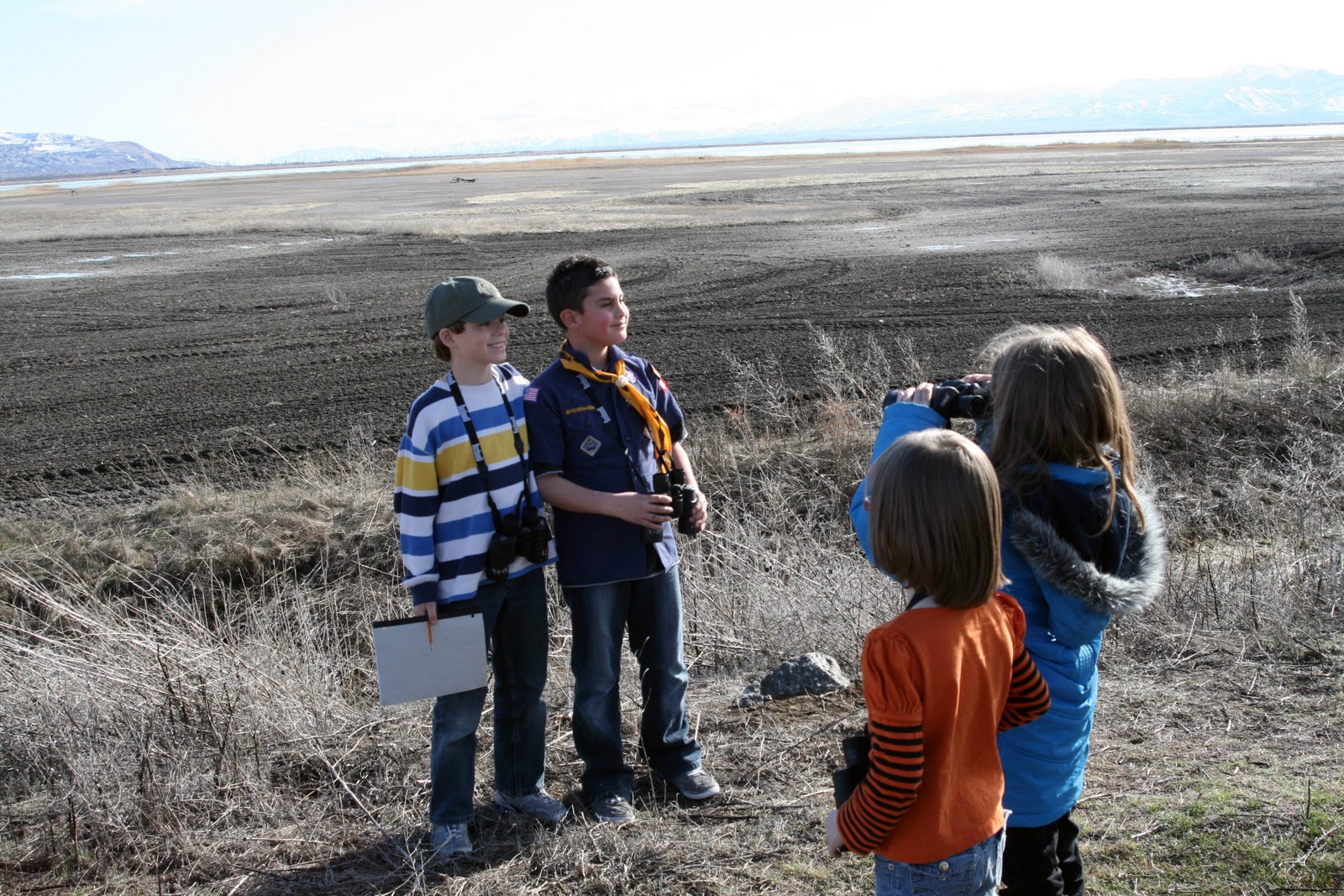
Today I held a Cub Scout "World Conservation Award" workshop for a Cub Scout Pack from Draper Utah. I have been doing these classes for 10 years and I love doing them. It is so rewarding to introduce these young men to nature and the Great Salt Lake Wetlands. Over the years I have had some tremendous Cub Scout groups come out and the one today was one of the best. They all came prepared with their pad of paper and pens ready to take notes and list the birds they saw. Thank you to the great cubs and their dedicated leaders for a successful workshop.

 |
| I am always happy when sisters of the cubs come along. We get far too few girls out to see the Nature Center and the birds |
 |
| Looking at the tank that displays the Great Salt Lake ecosystem There is live algae , Brine Shrimp and Brine Fly Larva |
 |
| Checking out some animal skeletons and skulls from the wetlands, including skunk, deer, beaver, muskrat, and an owl pellet with at vole skeleton. the vials hold samples of macro-invertabrates collected from the ponds at Farmington Bay. The macro-invertabrates are an important food source for birds |
 |
| These boys are looking at feathers and nests that have been gathered from the wetlands |
 |
| Parking lot with Great Blue Heron rookery in the background |
The boys learned how to identify birds by location, habitat and field marks, the taxidermy at the nature center helps teach people how to identify birds by their field marks.
 |
| What are the identifying field marks of this Tundra Swan |
 |
| These two Snow Geese are different colors but they have similar field marks that help us identify them both as snow geese. Can you see the field marks that they both have that identify them as Snow Geese? |
 |
| What field marks identify this as a Canada Goose? |
 |
| Juvenile Bald Eagle circling over Farmington Bay |
 |
| Adult Bald Eagle we saw circling |
 |
| Northern Harrier Hawk |
 |
| Great Blue heron in the pond next to the Nature Center |
 |
| Great Blue Herons working on their nests on the rookery |
I had a great time and hope you all will return many times to Farmington Bay.
Subscribe to:
Posts (Atom)