All Photos posted on this blog unless otherwise noted were taken by me with my Canon Rebel XTI using a 300 mm zoom lens

Saturday, January 21, 2012

Great Egret and More

Great Egret
I did interviews at work all week, I worked three long days and decided to use some extra leave hours I had to take Friday off and go birding. It was a damp drizzly day and I came away with a good layer of Farmington Bay mud on my Dodge Caravan. But there is never a bad day birding, I saw some great birds and got a few pictures even though the light was not very good.
Here is a list of birds seen and pictures of many of them,
I started out at the South Entrance of Farmington Bay at Bountiful Lake then over to the North (main) entrance to Farmington Bay then on to Glover Ponds and ended at Kaysville Ponds.

White-crowned Sparrows


Song Sparrow
Western Meadowlark

Spotted Towhee
Northern Flicker
Eurasian Collared Dove

Five or six years ago I saw my first Eurasian Collared Dove at my backyard feeders, a few months later I saw several of these doves in a tree just outside the gate at Farmington Bay. Today Eurasian Collared Doves are frequent visitors to my back yard and permanent residents at Farmington Bay. These introduced birds have established themselves very well in Northern Utah. The sad thing is that I am seeing fewer of our native Mourning Doves since these newcomers arrived.

Mallard

American Crow
American Kestrel

Rough-legged Hawk


Northern Harrier

Green-winged Teal
Northern Shoveler
A couple of years ago I took some pictures of a Green-winged Teal Drake and Northern Shoveler hen that never left each others side, I thought maybe it was a fluke but here again 2 years later, these two never left each others side. I don't now if it is the same couple but these two seem to have more than just a passing interest in each other. I will be keeping my eye out for Green-winged/Shoveler hybrids.
American Coot

Pied-billed Grebe

Great Egret
Several years ago we had a Great Egret that stayed well into January at Farmington Bay. Again this year we have had at least one and possibly two Great Egrets hanging around. These birds are uncommon in Northern Utah so having one stay well into winter is an unusual treat.

American Wigeon

Common Goldeneye

Bald Eagle

Red-winged Blackbird
Great Blue heron

Ring-billed gull
California Gull
Hooded Merganser
Canada Goose


It was a great day, I hope you enjoy the photos

Monday, January 16, 2012

Martin Luther King Day Birding

Prairie Falcon


I took my wife to an appointment in south west Salt Lake County to the town of Herriman Utah today so I could do some birding. This was my first time to go to this area and I will be going back there are plenty of good birding spots in the area. I spent most of the time today driving around to familiarize myself to the area so didn't get a lot of birding in, but was able to see some nice Birds of Prey. The only bird I was able to get a picture of is the Prairie Falcon above.

My best sightings were a Harlan's Red-tailed Hawk, Merlin and Ferruginous Hawk, none of which I was able to get a picture of.

Birds seen
Bald Eagle
Common Raven
Black-billed Magpie
Red-tailed Hawk
Ferruginous Hawk
Rough-legged Hawk
American Kestrel
Mourning Dove
Northern Flicker
White-crowned Sparrow
Merlin
Harlan's Red-tailed Hawk.

Saturday, December 31, 2011

Yellowlegs, January 2012 Bird of the Month

Greater Yellowlegs
It is Winter here in Northern Utah and most of the Shore Birds have moved on to warmer climates, but one shore bird remains throughout the winter months, the Yellowlegs. But wait there are two species of Yellowlegs the Lesser and the Greater Yellowlegs. The challenge is to identify which is which.

Of course they both have long yellow legs for which they are named, their markings are almost identical, so how do you tell the difference? If you are lucky enough to see a Greater and Lesser together side by side you can see the Greater Yellowlegs are slightly bigger, but there are other markings that help ID Greater and Lesser yellowlegs.
Lesser Yellowlegs
Lesser Yellowlegs The length of the bill is the same as the width of the head, Greater Yellowlegs the bill is longer than the width of the head. Lesser Yellowlegs have an all dark bill while the non-breeding bill of the Greater Yellowlegs is lighter gray at the base.
Lesser Yellowlegs have a straight pointed bill.
Greater Yellowlegs have a slightly upturned bill that is more blunt.

Lesser Yellowlegs breed in open boreal forest with scattered shallow wetlands. Winters in wide variety of shallow fresh and saltwater habitats.


Greater Yellowlegs breed in muskeg, wet bogs with small wooded islands, and forests (usually coniferous) with abundant clearings. Winters in wide variety of shallow fresh and saltwater habitats.


Both actively feed wading in shallows foraging for aquatic and terrestrial invertebrates, particularly flies and beetles. Occasionally small fish and seeds.


Greater Yellowlegs with Winter Plumage American Avocets
Lesser Yellowlegs with Long-billed Dowitchers
Both Greater and Lesser Yellowlegs are found throughout most of North, Central and South America.


Greater and Lesser Yellowlegs are my pick for Birds of the Month for January 2012

Saturday, December 3, 2011

Redhead Duck, December 2011 Bird of the Month


The Redhead Duck is my pick for Bird of the Month for December. The Redhead is a permanent resident of the Great Salt Lake Wetlands and is one of the most abundant waterfowl of the area. Redheads can be seen during the winter months and they also nest in the wetlands of the Great Salt Lake.
Male Redhead Duck is a beautiful duck, Chestnut red head, gold eyes, black breast and rump, gray wings, steel blue bill with a black tip. 
The Canvasback is similar in appearance to the Redhead with a chestnut red head, black breast and rump, but the Canvasback has red eyes a sloped forehead, slanted black bill and black face. The back of the Canvasback is much lighter canvas color than the gray back of the Redhead. 
Both Redheads and Canvasbacks are Diving Ducks.

Redheads are parasitical nesters often laying their eggs in the nest of other ducks letting other species set the eggs and raise their young.
A strikingly beautiful duck and one I am always excited to see, the Redhead is my choice of December 2011 Bird of the Month

Backyard Birds

Cedar Waxwing
This morning I noticed more than usual activity in my yard, most of my trees and bushes were bustling. There was a large flock of Cedar Waxwings, moving about the shrubbery in my yard. There were Juncos, Robins, Scrub Jays, Flickers and House Sparrows. I noticed that the Waxwings and Robins were feasting on the berries of my Juniper tree. I took some pictures none are great because I had to take them from my kitchen window. I had great fun watching the bird activity this morning here are a few pictures.

American Robin
Female Oregon Dark-eyed Junco
Western Scrub Jay
Cedar Waxwing
Cedar Waxwings drinking water from the melting snow on the roof of my neighbors shed
Waxwings eating Juniper Berries
Cedar Waxwing
Another Waxwing you can see the red waxy buds on his wings that give this bird it's name
Male Oregon Dark-eyed Junco

Saturday, November 12, 2011

Plethora of Pintails


There is something awe-inspiring to me to watch waterfowl land and take off. I must not be the only one because a lot of paintings I have seen of waterfowl are of them either landing or taking off.

I went out to Farmington Bay yesterday to look for a Hudsonian Godwit that has been sighted out there this week. I didn't see the Godwit but there were a lot of waterfowl. I came upon this large group of mostly Northern Pintails with a few American Wigeons included as they were feeding on salicornia (picleweed) on this playa.
They were very active working the playa feeding on the mineral rich pickle weed.


A few American Wigeons mingled with the large number of Pintails


I sat and watched them for about ten minutes and took over a hundred pictures. Then as I started to drive off they all got up. Very nervous because this is after all the hunting season. Though these birds are safe where they are at, they are in the Waterfowl rest area. No hunting allowed in this area of Farmington Bay. Unless of coarse you are shooting with a canon or nikon etc.

Saturday, November 5, 2011

Favorite Birds of Prey Photos

Red-tailed Hawk, I felt very fortunate to have gotten this picture one of my over all favorites.
None of these pictures are new, I'm pretty sure I have posted most if not all these pictures before. I haven't been able to get out for a while and today was the first measurable snow storm of the year for the Wasatch Front. Winter is always a good time to view Birds of Prey so I thought I would post some of my favorite Birds of Prey photos.
I have hundreds of Bald Eagle photos but this one is probably the best.
Northern Harriers are the most abundant hawk at Farmington Bay in the winter months
Not only my favorite Kestrel photo but one of my favorites of all my photos. A better camera and lens would have made this photo extraordinary, I like the sunflowers and white background that make this bird really stand out. I felt very fortunate to capture this bird as it took off. This Kestrel took off from the sunflower swooped across the road and caught a meadow vole.
It was New Years Day 2008 my brother in law and I had been looking at the assortment of waterfowl at the Kaysville Ponds. On the way to take him home driving through a neighborhood perched on a power pole was this Merlin. He patiently sat there and let me take 20 or more pictures.
New Years day 2007 we saw 9 Short-eared Owls 
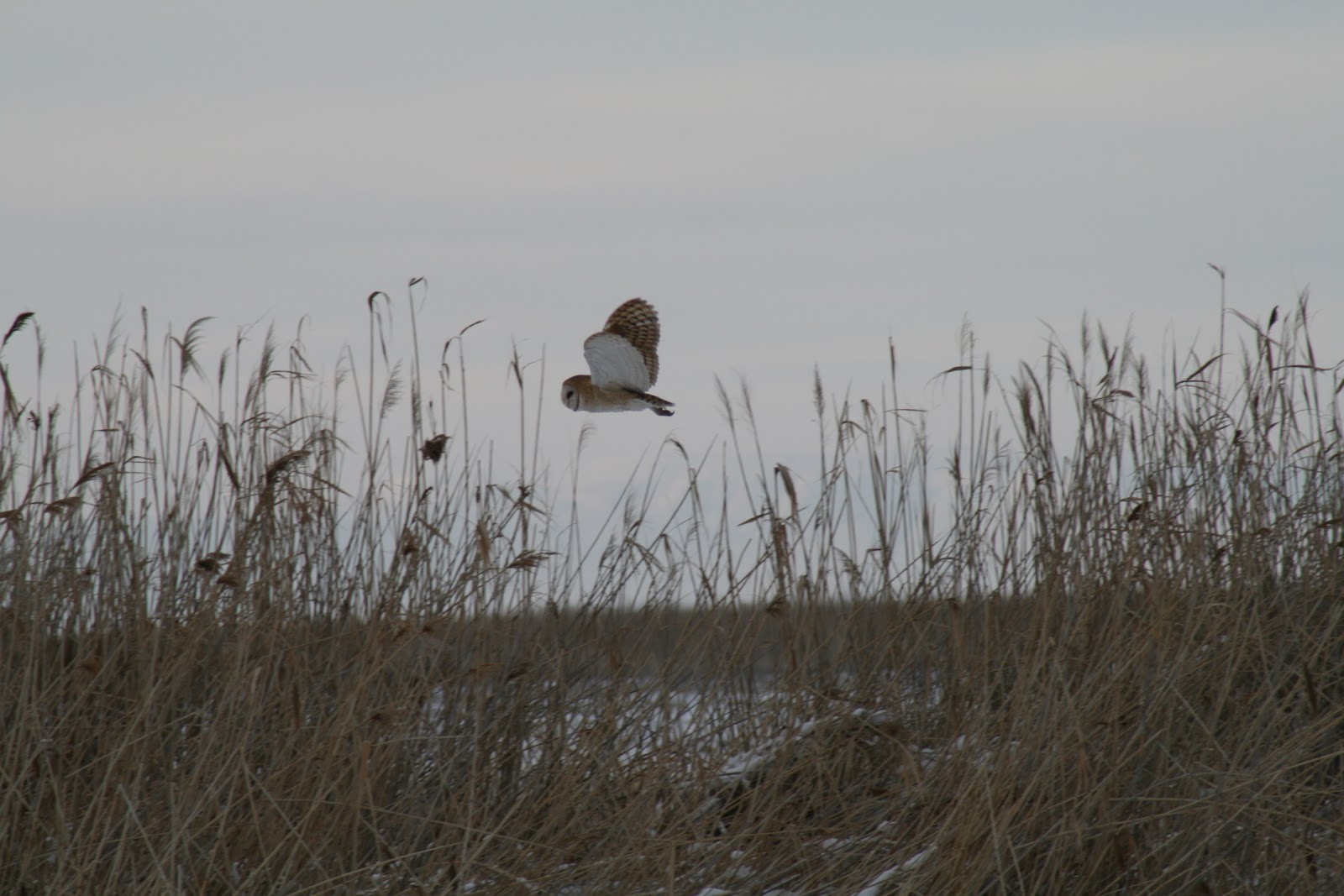
There was an eruption of Barn Owls in 2007, unfortunately it was a cold rough year for the Owls and many did not make it. I occasionally see them but no where close the the numbers of the winter of 2007.
I have seen Great Horned Owls at Farmington Bay but unable to photograph any of them. The only Great Horned Owls I have photographed were at the ranch at Antelope Island
While I have seen many Prairie Falcons at Farmington Bay this is the only one I was able to photograph. I took this picture in 2007.
I have taken a lot of photos of Red-tailed Hawks this is the only breeding adult I have photographed.
I think the Northern Rough-legged Hawk is the most beautifully marked of all the buteos. 
I took this picture in my backyard. This Sharp-shinned Hawk took advantage of my bird feeders. though when he comes and takes a bird from my yard it quiets things down at my feeders for a while he is not unwelcome. I'm always excited to see a Sharpie in my yard.
Not a winter bird the Swainson's Hawks have all flown south for the winter. This bird was one of two that were hatched in our neighborhood this year making it 5 years in a row that Swainson's Hawks have nested successfully in my neighborhood.
Not that crazy about winter but birds of Prey make the cold months much more tolerable.