All Photos posted on this blog unless otherwise noted were taken by me with my Canon Rebel XTI using a 300 mm zoom lens

Tuesday, January 25, 2011

Can't Get Enough Wood Ducks


Saturday was a Utah weather day, one minute the sun was shining and pleasant the next snowing like crazy. We had to go to Ogden and Nery wanted me to show her the park where I took the Wood Duck pictures. Spencer and Rachel live a short distance from Beus Park so they met us there along with baby Jude to go for a walk. When we first got there the sun was shining, within a few minutes it was snowing hard and by the time we finished walking the sun was out again. I only took a hundred and fifty more Wood duck Pictures.

In the last two weeks I have taken pictures of Barrow's Goldeneye and Wood Ducks for the first time. As I look at these birds I can't help but think that God sometimes created some creatures not just to adapt to or blend into their environment but just because He wanted something pretty to look at. That I really think goes for all waterfowl because they come in so many shapes sizes and colors and some with such intricate markings that they are truly works of art and right there at the top is the beautiful Wood Duck.
Here are some pictures of our walk


Nery and Steve

Spencer, Rachel and Baby Jude

Northern Flicker


Monday, January 17, 2011

Barrow's Goldeneye and More

Barrow's Goldeneye pair, Common Goldeneye Drake, American Wigeon Drake
Barrow's Goldeneye
American Wigeon
I got out for a couple of hours today, my target bird was Barrow's Goldeneye since I had not yet photographed any. I was fortunate to locate 2 pair in the same place I saw some two years ago on the Jordan River Parkway near the Oxbow in Salt Lake County.
Here is a list of the birds I saw:
Northern Shoveler
Mallard
Common Goldeneye
Barrow's Goldeneye
American Wigeon
Green-winged Teal
Gadwall
Canada Goose
Black-capped Chickadee
House Sparrow
American Goldfinch
American Coot

I also stopped by Decker Lake and saw
California Gulls
Ring-billed Gulls
Mallards
Green-winged Teal
Common Merganser
Canada Goose

Here are some more pictures of todays outing
Northern Shoveler Drake

Mallard

Pair of Barrow's Goldeneye and a Pair of Common Goldeneye
Canada Geese
Common Merganser Drake

Saturday, January 8, 2011

Waterfowl

Northern Pintail drakes and 2 Mallards pairs
When I first started keeping my birding life list I started with Waterfowl. Waterfowl for me are the easiest of birds to identify. They are large birds, they come in many varieties and their field marks are easy to identify. That of course goes for the Drakes, female ducks are a bit more difficult. I have listed pictures of most of the ducks that visit Farmington Bay and I have tried to show pictures with both male Drake and female Duck of each species.
Mallard Drake and Duck

Northern Pintail Drake and Duck
Blue-winged Teal Drake and Duck
Bufflehead this is typical during courtship 6 Drakes courting one Duck
Canvasback Drake
Cinnamon Teal Drake and Duck
Gadwall courtship flight two Drakes courting one Duck
Common Goldeneye Drake
Common Goldeneye Duck
Waterfowl remain some of my favorite birds and one of the reasons I spend so much time at Farmington Bay. God was really showing his artistic side when he created waterfowl.
Green-winged Teal Drake
Hooded Merganser

Redhead two Drakes and on Duck
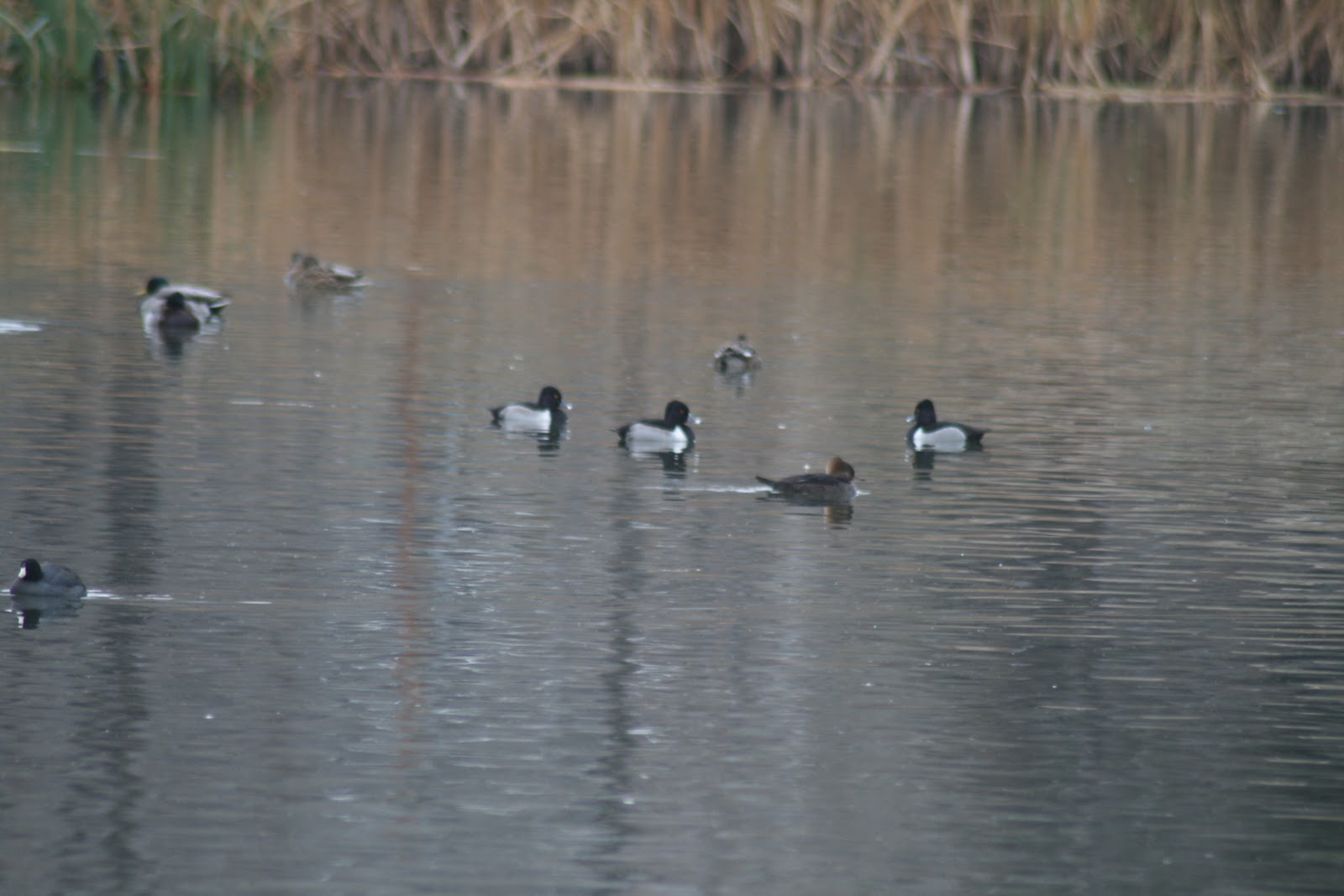
Ring-necked Duck and a hen Hooded Merganser
Ruddy Duck drake

Canvasback eight Drakes three Ducks

Lesser Scaup drake
Lesser Scaup Duck

Northern Shoveler courtship flight three Drakes and one Duck
American Wigeon two pair and two pair of Northern Pintails in the back
Wood Ducks Drake and Duck
Canada Goose males and females look alike
Tundra Swan males and females look alike
Graylag Goose (Europe)


Friday, January 7, 2011

Chukars, Pheasants and more


Chukar
Nery and I went exploring today, I have been wanting to go to North West Utah for a long time. A couple of days ago some one on the Utah Bird Net report some great birds in Howell Utah so I decided today was the day to finally take a trip North. We didn't have quite the great bird day that he did but it was good just the same.

Birds seen:
Red-tailed Hawk
American Kestrel
Northern Harrier
Prairie Falcon
Raven
Mourning Dove
Eurasian Collared Dove
Horned Larks everywhere
Meadow larks
Song Sparrow
Red-winged Blackbird
Brewer's Blackbird
House Finch
House Sparrow
Mallards
European Starling
Ring-necked Pheasant at least 50
Chukar a group of at least 20

Here are a few pictures of our trip
Chukars

Hen Ring-necked Pheasant

Male Ring-necked Pheasant


These Mallards were laying in the road and too cold to even move as we drove by
We saw a lot of Deer

Rocket display at ATK
Nery
Yours Truly 

Sunday, January 2, 2011

January 2011 Bird of the Month Northern Harrier


During the winter months a drive through the wetlands in Utah you are sure to see large numbers of slender long-tailed hawks flying low just above the cattails and Phragmites then all of the sudden drop down out of sight. These slender owl faced hawks are Northern Harriers. 


Unlike other hawks, the Northern Harrier relies on its hearing as well as its vision to capture prey. The feathers of the face are stiff to help transmit sound, and it shows a pronounced "facial disk," much like that of an owl.


Male Northern Harrier

Male Description

Head, back, and upper chest light gray, wing-tips black. Line of black on rear of wings. Underwings white. Tail darkish gray above and whitish below, with some barring. Rump white.

Female Harrier eating a Common Merganser  

Their most notable field mark is the white band on the rump at the base of it's tail. One of my favorite pass-times in winter is to watch these graceful birds hunt for voles at Farmington Bay.


Hunting Voles at Farmington Bay
The Northern Harrier feeds primarily on mice, voles and small birds. It will, however, take larger prey, such as rabbits and ducks. It has been known to subdue large prey by drowning it. I watched one take a fish out of the water one time.


Female Description

Back dark brown, with many feathers edged with tawny. Face streaked brown and whitish. Face outlined by white facial disk. Chest and belly streaked  tan. Rump white. Upper side of wings brown, lower side barred white and dark brown. Tail brown with dark bars.


  • Most male Northern Harriers are mated to one or two females at the same time. Some males pair with up to five mates in a season. Females incubate the eggs and brood the offspring, while the male provides the bulk of the food for his mates and their nestlings.