All Photos posted on this blog unless otherwise noted were taken by me with my Canon Rebel XTI using a 300 mm zoom lens

Friday, April 2, 2010

If the state of the world gets you down Go Birding

I have learned to never go out without my camera

Canada Geese

Downy Woodpecker


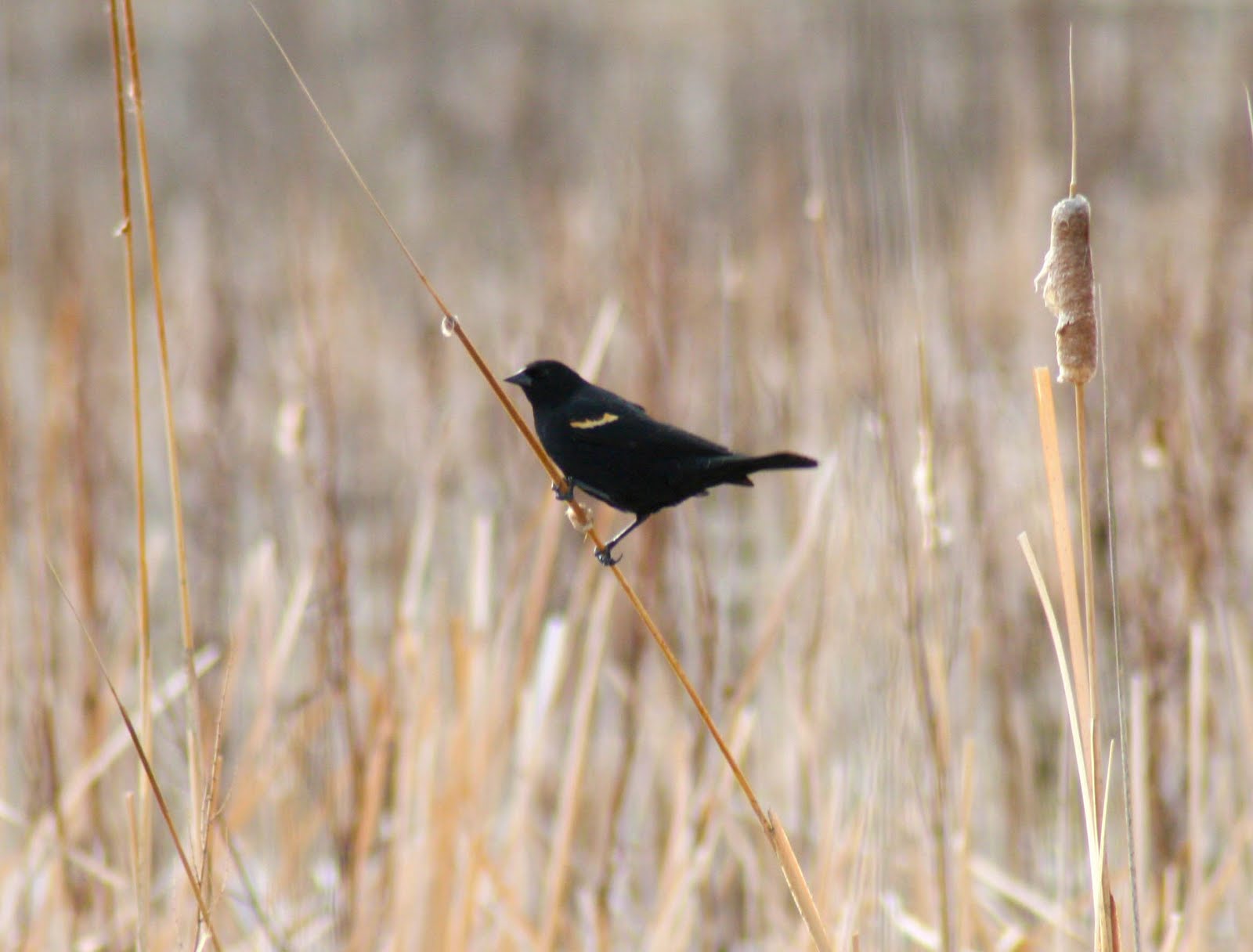
Red-winged Blackbird


Cedar Waxwings


APRIL BIRD OF THE MONTH

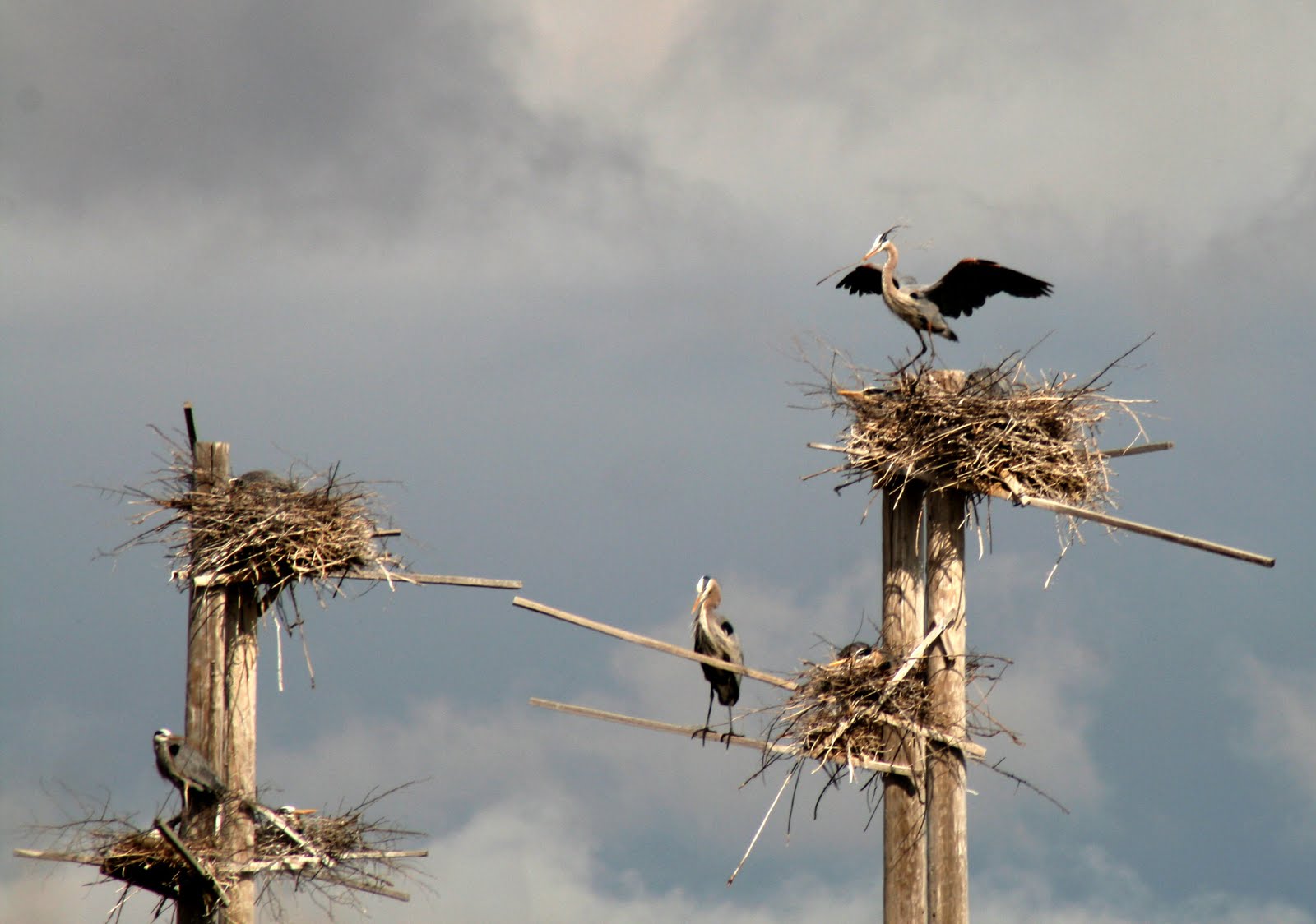
I have chosen the Great Blue Heron for my Bird of the Month for April. The Great Blue Heron is one of the favorites at Farmington Bay. This rookery was built several years ago as an Eagle Scout Project and as many as 16 pairs of Herons have nested on it each year. I never tire of watching the Herons. In January this year while birding Farmington Bay I observed Herons in the fields hunting mice voles and gophers because all of the water was frozen over. I posted this phenomenon on this blog with pictures.
Here are some more pictures of one of my favorite birds.


Appearance

Herons
Herons
  • Large, gray bird.
  • Long legs
  • Long, "S"-shaped neck.
  • Long, thick bill.
  • White crown stripe.
  • Black plume extending from behind eye to off the back of the neck.
  • Shaggy feathers on neck and back.
  • Bluish gray back, wings, and belly.
  • Reddish or gray neck.
  • White morph all white with pale legs, yellow bill.

Immature Description

Juvenile similar to adult, but has gray crown, a dark upper bill, rusty brown edging to back feathers, and lacks body plumes.

Similar Species

  • Sandhill Crane is larger, has a prominent tuft of bushy feathers on its rump, a shorter bill, and a red cap, and is found in fields rather than ponds.
  • Little Blue Heron is much smaller and more slender, lacks plumes on the head, is entirely uniform dark blue-gray, has a dark bill with a bluish base, and greenish legs.
  • Tricolored Heron is more slender, has white head plumes, and a white belly contrasting sharply with the dark chest.
  • Great Egret differs from white morph by being more slender, lacking head plumes, and having black legs.

  • arde_hero_AllAm_map.gif

Monday, March 1, 2010

March Bird of the month DOWNY WOODPECKER


My pick for March's Bird of the Month the little Downy Woodpecker is proof positive that the Black-capped Chickadee does not have the monopoly on cute. These little beauties eluded me for so many years not realizing that they frequented my backyard. Once I made a point of watching for them I now see them all the time and never tire of watching them work the trunk of my cottonwood tree.


The active little Downy Woodpecker is a familiar sight at backyard feeders and in parks and woodlots, where it joins flocks of chickadees and nuthatches, barely outsizing them. An often acrobatic forager, this black-and-white woodpecker is at home on tiny branches or balancing on slender plant galls, sycamore seed balls, and suet feeders. Downies and their larger lookalike, the Hairy Woodpecker, are one of the first identification challenges that beginning bird watchers master.


  • Size & Shape

    Downy Woodpeckers are small versions of the classic woodpecker body plan. They have a straight, chisel-like bill, blocky head, wide shoulders, and straight-backed posture as they lean away from tree limbs and onto their tail feathers. The bill tends to look smaller for the bird’s size than in other woodpeckers.


  • Color Pattern

    Downy Woodpeckers give a checkered black-and-white impression. The black upperparts are checked with white on the wings, the head is boldly striped, and the back has a broad white stripe down the center. Males have a small red patch on the back of the head. The outer tail feathers are typically white with a few black spots.


  • Behavior

    Downy Woodpeckers hitch around tree limbs and trunks or drop into tall weeds to feed on galls, moving more acrobatically than larger woodpeckers. Their rising-and-falling flight style is distinctive of many woodpeckers. In spring and summer, Downy Woodpeckers make lots of noise, both with their shrill whinnying call and by drumming on trees.


  • Habitat

    You’ll find Downy Woodpeckers in open woodlands, particularly among deciduous trees, and brushy or weedy edges. They’re also at home in orchards, city parks, backyards and vacant lots.

    pico_pube_AllAm_map.gif


Sunday, February 28, 2010

Little Beauties easily missed


Have you ever driven down a country road or dirt road and seen little birds flitting about and assumed they may be sparrows. They are small and if you don't stop and take a close look they appear plain dull light brown. These little birds are a testimonial to the importance of stopping to smell the roses or some of the really beautiful things in life will pass us by. I am talking about the small but beautiful Horned Lark. I took a ride out to Bear River Bird Refuge Yesterday and these little guys were everywhere. Not a lot of diversity out there yesterday, in addition to the Horned Larks, a few Harriers, about a thousand Tundra Swans, Canada Geese, a female American Kestrel and one little skunk.


Monday, February 15, 2010

Eagle Day at Farmington Bay


Liberty from Hogle Zoo visiting for Eagle Day

I spent most of Friday this weekend at Farmington Bay guiding tours and instructing a Cub Scout class. There were about 150 eagles around most of them would not allow a close approach and most of them were on the east side inside the gates and required a mile walk to get to them. On Saturday for Eagle Day we had some nice activities at the nature Center, Hawk Watch brought a Swainson's Hawk and a  Red-tail Hawk, Hogle Zoo brought Liberty their Bald Eagle from the Bird Show. As far as wild Eagles there were a few out on the ice though for easy viewing though a spotting scope. In addition to eagles I saw my first American Avocets of the season, my second ever Lesser Black-backed Gull, several flights of Common Mergansers, a hundred or so American Crows hanging with the Eagles eating scraps, and some nice views of Red-tailed  Hawks. Here are a few pictures of the Red-tails.


Saturday, February 6, 2010

February 2010 Bird of the Month American Kestrel

Males


Our most colorful, most abundant and smallest Falcon the American Kestrel is my pick for February bird of the month. When I was a kid we knew this beautiful little hawk as a Sparrow Hawk and never then and still now grow tired of watching these little falcons as they hover over fields in search of mice. The first of the birds of prey that I was able to identify.


Female American Kestrel


Appearance

Hawklike
Typical Voice


Adult Description
Small hawk.
Rufous back and tail.
Two dark mustache marks on face.
Male Description
Wings blue-gray with black spots. Tail rufous on back with a broad black subterminal band and a white or rufous tip. Tail white underneath with a few incomplete black bars. Back and rump orange to rufous, with a variable amount of black barring. Underparts pale buff to orange, with variable amount of black spotting, especially along sides. Crown blue-gray with some orange. Buffy spots with dark centers on either side of nape (back of head), making "eyespots" visible from behind.
Female Description
Wings rufous barred with black. Tail rufous with black bands. Underparts creamy to buff, heavily streaked with brown. Back rufous with dark barring